

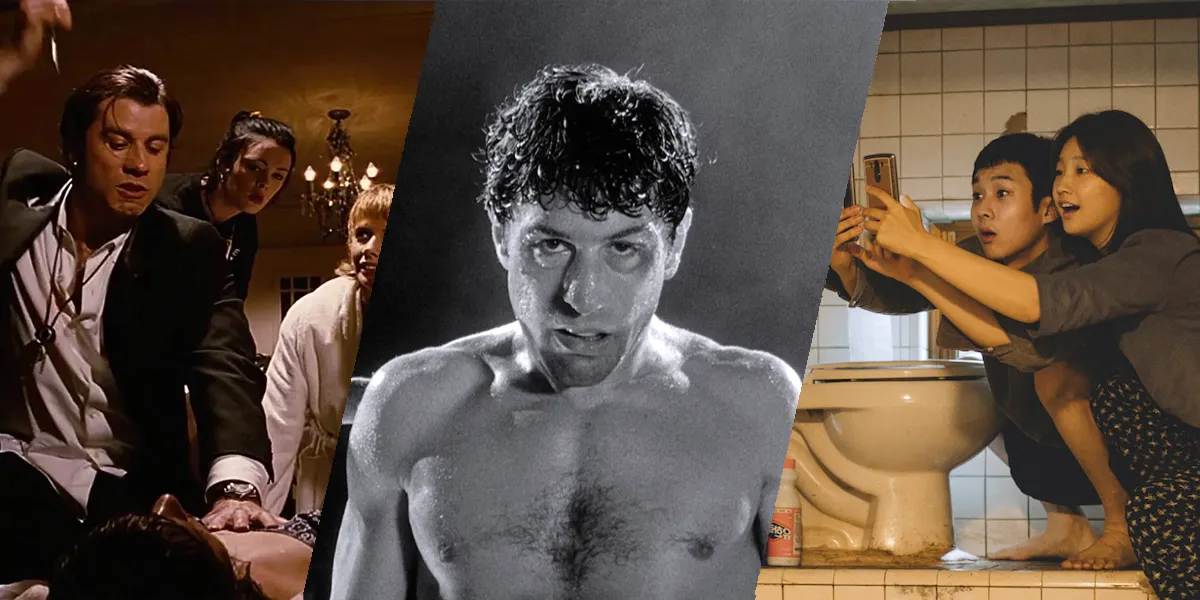
There are certain figures that tend to take the spotlight when it comes to the art of crafting a film, from directors to composers to DOPs. But what about movie editing? Visually, cinematography is key, as the way a film is composed, shot, and lit during production can make the script come alive in new and unexpected ways. But editors are just as important in terms of visual storytelling, as their work helps create the final story we see on the screen, and often has the power to change a picture’s rhythm and atmosphere.
If you work in the industry – on anything from making actual films or doing video production for sales, brand, social media videos and more – you’ll know how important it is to tell the story in the right order, and that a film or a video’s mood, cohesion, and overall narrative can be essential for a viewer’s engagement. Great movie editors excel at making the plot advance in a seamless way that immerses us into the film and elicits an emotional response in us. And though they also excel at making it all look seamless, a great deal of work has gone into every frame we see.
Sergei Eisenstein (Battleship Potemkin), Verna Fields (Jaws), Akira Kurosawa (Seven Samurai), Nino Baragli (The Good, The Bad, and the Ugly), Michael Kahn (Raiders of the Lost Ark): you might have heard of these famous movie editors, who helped craft some of the best movies of all time, but there are so many more to discover. We made a list of 5 movies where the editing shines, from all-time classics to recent releases. Find them all below in alphabetical order. Enjoy!
1. Oppenheimer (2023)
Editor: Jennifer Lame
The rightful 2024 Oscar winner for Best Editing was Jennifer Lame for her work in Oppenheimer, and if you watch the clip above, you’ll understand why. Christopher Nolan’s magnus opus doesn’t just dramatize the life of “father of the atomic bomb” J. Robert Oppenheimer (Cillian Murphy), but it keeps us on the edge of our seat for its 180-minutes runtime. It’s a story of many players – from Emily Blunt’s Kitty Oppenheimer to U.S. government official Lewis Strauss, played by a superb Robert Downey Jr., and many more – that unfolds slowly but methodically, only to culminate in some incredibly tense, urgent scenes you won’t forget.
Jennifer Lame had already collaborated with Nolan on Tenet (2020), so she was already familiar with the director’s signature non-linear storytelling. But what she delivered in Oppenheimer was something else entirely. This 2023 gem could have just been another dialogue-heavy, dark historical drama inspired by real events, but instead it was also a fast-paced, suspenseful, disquieting epic that used both the bleakness of its content and a dual, non-linear structure to deliver tension, having us glued to the screen for the entire time.
2. Parasite
Editor: Jinmo Yang
Editor Jinmo Yang has worked on Yeon Sang-ho’s Train to Busan and collaborated with director Bong Joon Ho on many acclaimed features, including Okja (2017) and even the recently released Mickey 17. Yet what the South Korean editor is best known for is his work on multi-Academy Award winner Parasite, where the editing helps blend genre, comedy, and chaos and even reveal some important aspects of the story.
Without spoilers, Parasite is a film about social inequality and class differences, revolving around a family who’s struggling to go by infiltrating the home of a wealthy but naïve family in more than one way. One of the reasons why Parasite was so universally acclaimed is the combination of a highly relatable story with timely themes and a script that knows exactly how to deliver tension, revealing pieces of information to both the audience and the characters themselves at exactly the right time.
The editing plays a fundamental role in this, as Yang seamlessly blends long takes with fast-paced sequences that alter the flow of time as we know it mirroring the characters’ predicament, with superb control of rhythm that makes it all so much more gripping and fascinating. Yang has spoken many times about how complex it was to put together the iconic “belt of faith” sequence, and if you watch the clip above, you’ll get an idea of what you’re in for with this film.
3. Psycho (1960)
Editor: George Tomasini
George Tomasini has worked on nine of Alfred Hitchcock‘s movies, including his most beloved ones, from Rear Window (1954) and Vertigo (1958) to North by Northwest (1959) and The Birds (1963). Each of these collaborations would deserve its on paragraph in this article, but we’ve chosen Psycho for this list as it perfectly showcases Tomasini’s skills.
The film is about an embezzler on the run named Marion Crane (Janet Leigh) who needs a place to hide and finds the isolated Bates Motel. There, she is welcomed by the owner, Norman Bates (a phenomenal Anthony Perkins), who is clearly dealing with a disturbed mother but who seems friendly enough. However, Marion is soon found murdered in the shower, which soon sees a series of individuals show up at the property: a private investigator (Martin Balsam), and Marion’s lover (John Gavin) and sister (Vera Miles).
The rest is up to you to discover, but Psycho is a masterpiece in slow-burning storytelling that went on to define the horror genre as a whole, particularly the slasher subgenre. The editing is once again so important in this, as Tomasini’s rapid cuts, violence that is inferred rather than shown, and tense atmosphere with sudden suspense-driven jump scares makes the horror psychological rather than monster-like, which is something the genre hadn’t yet scene. The shower scene is one of the best examples of Psycho‘s superb editing: one that relies more on our visceral reaction than on pure shock value.
4. Pulp Fiction (1994)
Editor: Sally Menke
Editor and producer Sally Menke edited every Quentin Tarantino film up to her death in 2010; the filmmaker, who really values movie editing, described Menke as his “only, truly genuine collaborator”. She received many accolades for her work on some of the director’s most acclaimed movies, from Kill Bill Vol. 1 (2003) and Vol. 2 (2004) to Jackie Brown, Inglorious Basterds (2009), and of course, Pulp Fiction (1995).
Sally Menke’s editing style matches Tarantino’s filmmaking really well, perfectly adapting to the dialogue-driven, slow-burning storytelling and fast-paced action the director is known for. Menke often uses long takes and abrupt cuts that are in sync with the music, often switching between slow-cut and high-energy sequences to create a jarring effect and focusing on musical rhythm and character evolution. We chose Pulp Fiction because on top of this, the film also features a non-linear narrative structure created precisely to confuse audiences: the movie famously delivers its best scenes at the end, answering the audience’s questions in unexpected, thrilling ways.
On top of this, Pulp Fiction famously features scenes that were shot in reverse to heighten the film’s stakes. You can see an example of this in the “adrenaline shot” scene above, which was actually shot with John Travolta quickly pulling the needle out of Uma Thurman’s chest instead of the other way around. Once reversed in the editing, the scene looks so much more realistic, and has a bigger impact on the viewer as a result. Pulp Fiction earned Menke a well-deserved Best Editing Oscar nod in 1995, and if she didn’t win the award, it’s only because the category was very strong that year, with Arthur Schmidt ultimately winning the prize for his work on Forrest Gump.
5. Raging Bull (1980)
Editor: Thelma Schoonmaker
Let’s end the list with another classic, edited by one of the most famous editors around: Thelma Schoonmaker, Martin Scorsese’s editor since the 60s, who was Oscar-nominated nine times for her work in his movies. Schoonmaker won three well-deserved Academy Awards for Raging Bull (1980), The Aviator (2005) and The Departed (2007), but she has edited many more gems, from Woodstock (1970), The King of Comedy (1982) and Goodfellas (1990) to Hugo (2011), The Irishman (2019), Killers of the Flower Moon (2023), and many more.
For this list, we chose Raging Bull, telling the story of middleweight boxing champion Jake LaMotta (Robert De Niro), because it’s Schoonmaker’s most universally acclaimed movie, featuring truly incredible editing. If you only watch one of the boxing scenes in Raging Bull, you’ll already get an idea of why that is: the film takes the definition of visceral filmmaking to a whole new level, with non-linear storytelling that makes us fully immersed in the protagonist’s world, so much so that – in the best Scorsese tradition – it feels like we’re experiencing it in real time, from LaMotta’s perspective.
On top of this, the combination of slow-motion shots and rapid-fire sequences gives Raging Bull a surreal, dream-like quality that perfectly fits the story it tells, and that re-defined the boxing genre as a whole when the film was released. Scorsese has spoken many times about having been inspired by Psycho‘s shower scene for Raging Bull, particularly a certain scene at the end, and if you pay attention to the way the violence is portrayed – in no small part thanks to Schoonmaker’s editing – you’ll understand why.
The 5 movies listed above are only some examples of superbly edited movies that you should check out, but they should serve as a template of what to pay attention to when looking at how a film was cut together. If you’re looking for more recommendations, check out classics like The Passion of Joan of Arc (Marguerite Beaugé), 2001: A Space Odyssey (Ray Lovejoy), and Magnolia (Dylan Tichenor), and recent releases like Bait (Mark Jenkin), Dune (Joe Walker), and last year’s Best Editing Oscar Winner Anora (Sean Baker).
Source link
